Murano Glass: A Historical and Technical Reader · Episode 3 of 6
Murano Glass, Part III: Filigrana, Reticello and Murrine
Murano’s technique names are more than labels for decorative effects. Filigrana describes a way of building patterns into hot glass; reticello names a particular crossed structure; murrine begin as patterned canes cut into slices. Following the process behind each word reveals a craft that depends on timing, heat and coordinated work—and a history in which old forms were repeatedly adapted.
Filigrana: pattern built into the glass
Filigrana is not paint applied to a finished vessel. Glassworkers prepare canes containing threads of lattimo or coloured glass, then arrange and fuse them with clear glass while the material is hot. The Murano Glass Museum’s technical glossary distinguishes filigrana a retortoli, where the threads are twisted, from reticello, where the canes cross. The crossing creates a net-like design and can trap small bubbles at the intersections.
The museum dates the invention of filigrana to the first half of the sixteenth century, while its gallery guide associates the technique with Filippo Catani della Sirena around 1527. Such dates name a historical attribution, not a surviving patent or a modern workshop manual. The important technical point is that the pattern is assembled from prepared canes and must be fused while the glass remains workable.
Rosetta and millefiori: from cane to pattern
A rosetta cane is made from successive layers of differently coloured glass shaped in a mould. Its cross-section reveals concentric rings and often a star. When a cane is pulled longer and cut into short slices, the pattern repeats in each section. The slices can become beads, or they can be embedded in a hot gather to create a millefiori surface. The museum glossary describes millefiori as a decoration that makes a vessel look like a field of flowers; rosetta is one cane design used to produce that effect, not a synonym for every millefiori pattern.
Murrine: a mosaic that can be reheated
Murrine begin as short sections of patterned cane arranged while cold. The composition is gradually reheated until its elements soften and join, then shaped or attached to another glass form. The Glass Museum traces the technique to Roman precedents and describes its revival in Murano in the nineteenth century. Its account follows how makers used millefiori canes to revive historic effects while inventing new designs, including miniature portraits.
These names are useful because they connect appearance to process. But they do not identify an object’s maker, date or place of production on their own. The twentieth-century designer Carlo Scarpa, for example, reworked mezza filigrana in a Venini piece catalogued by The Metropolitan Museum of Art: instead of the traditional clear rods, he used coloured rods to create a new linear texture. A technique can therefore remain recognisable while its design changes.
For the materials behind these processes, continue to episode two on cristallo and lattimo. The next episode widens the lens from the bench to the people and rules that shaped production in Murano’s glasshouses. For the island’s longer history, return to episode one.
Contemporary pieces shaped by glass technique
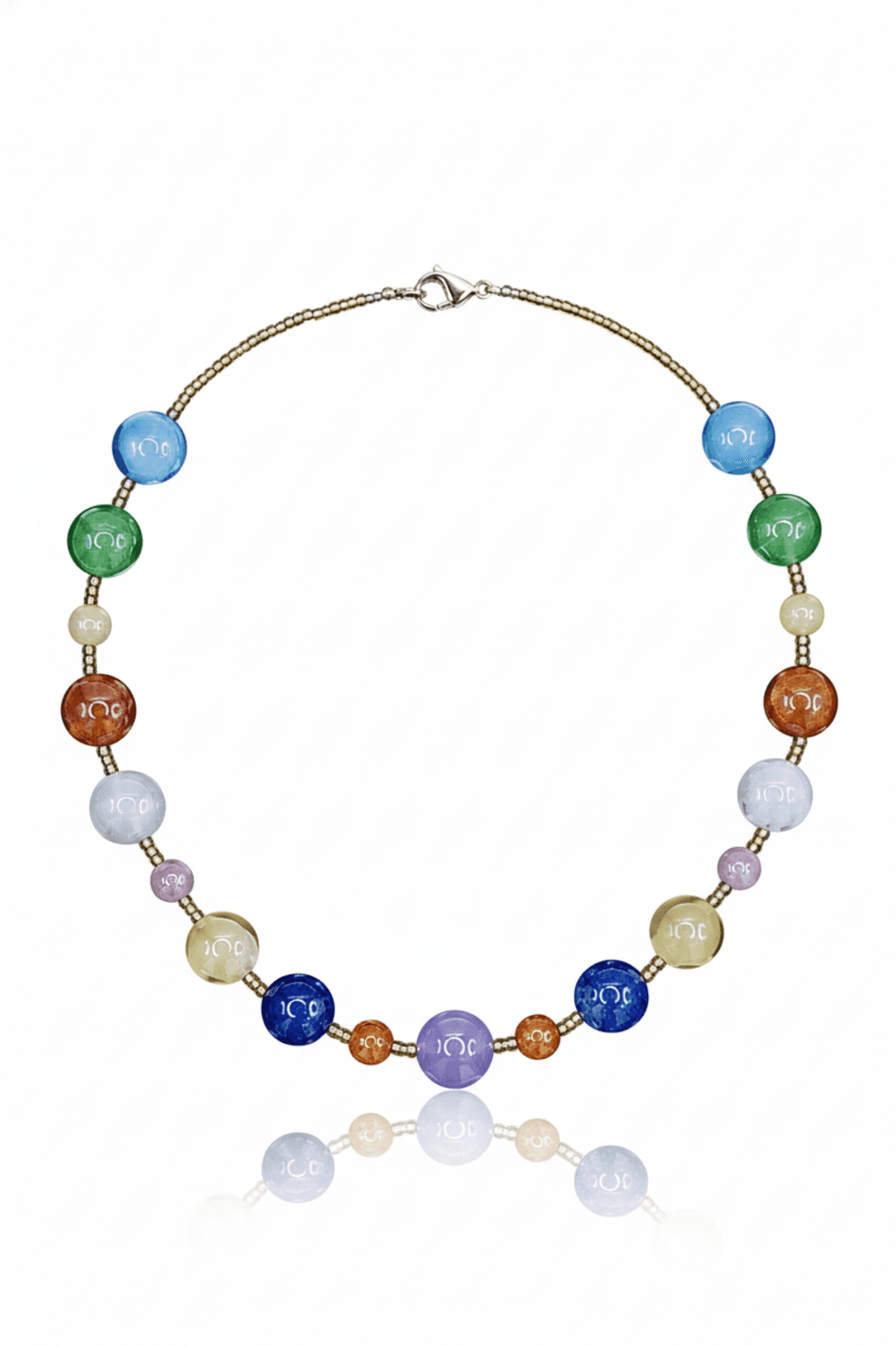
Mixed Gems Necklace
120,00 €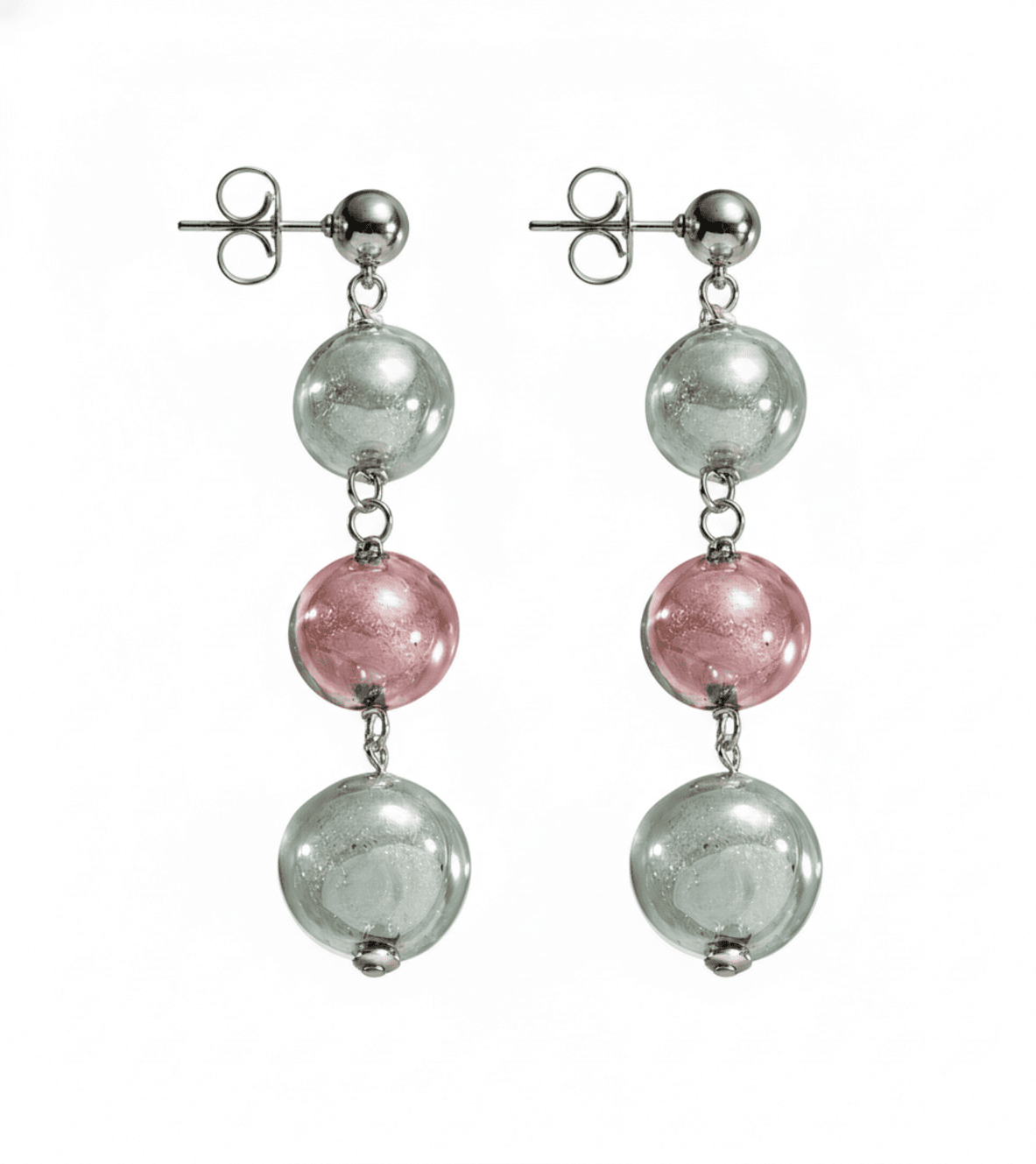
Pastel Garden Earrings
80,00 €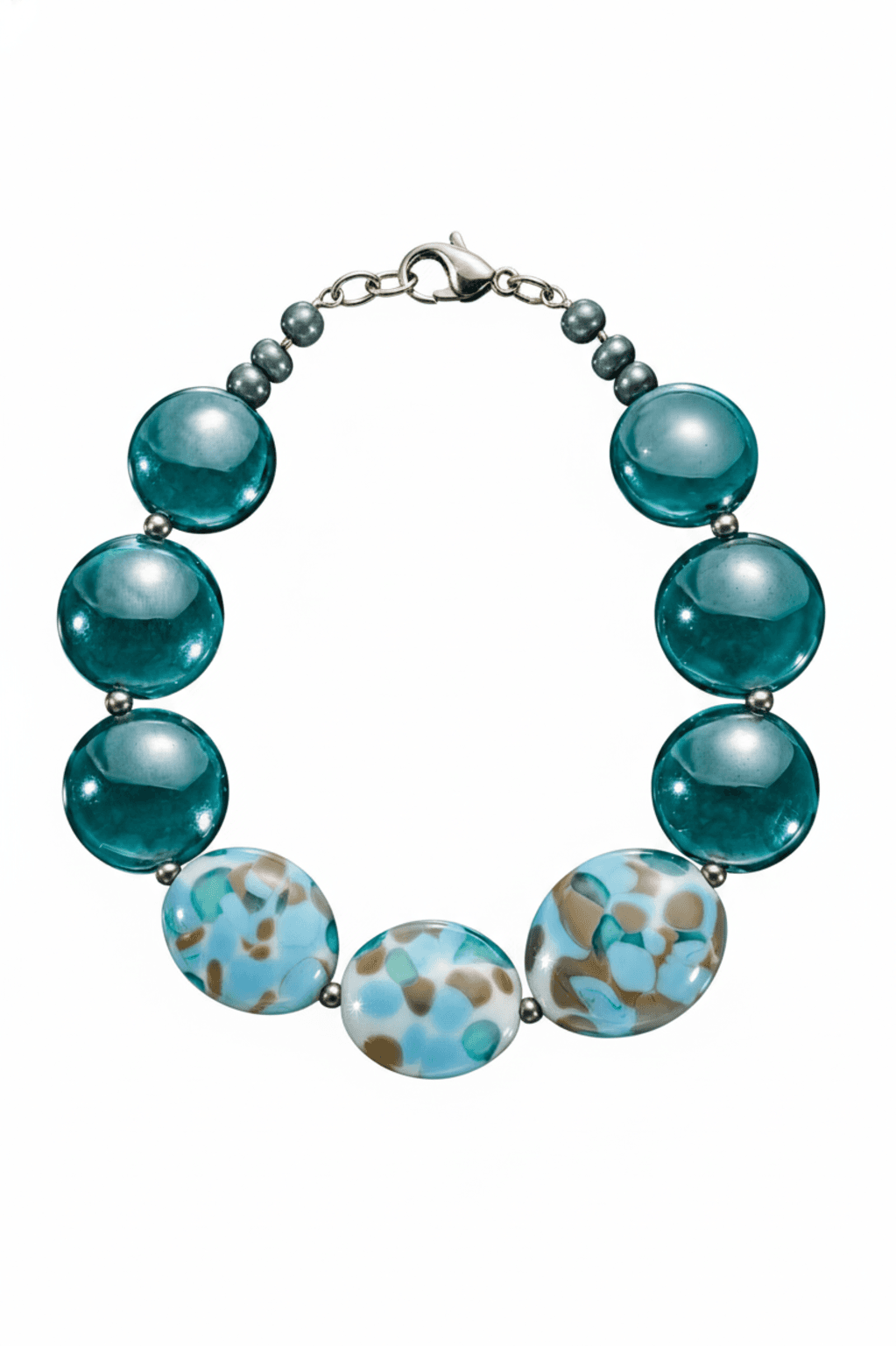
Azure Lagoon Bracelet
80,00 €
Explore handmade Murano glass jewellery
Sources & further reading
Definitions of filigrana, retortoli, reticello, rosetta canes and millefiori, with the process behind each term.
From the fourteenth to the seventeenth century: the Golden Age
The museum’s account of the sixteenth-century emergence and technical construction of filigree glass.
Glass Museum: room-by-room gallery guide
The attribution of early filigree to Filippo Catani della Sirena around 1527 and descriptions of historic objects.
From mosaic glass to ‘millefiori’: murrine
The assembly and reheating of murrine, their Roman antecedents, nineteenth-century revival and millefiori cane portraits.
Carlo Scarpa: Rigati e Tessuti, no. 3976
The museum catalogue’s description of Carlo Scarpa’s modern adaptation of mezza filigrana in a Venini piece.