Murano Glass: A Historical and Technical Reader · Episode 2 of 6
Murano Glass, Part II: Cristallo, Lattimo and the Material
“Murano glass” names a place and a living body of practice, not one chemical formula. The words cristallo and lattimo refer to particular historical kinds of glass, each made possible by choices about ingredients, heat and working time. Reading them carefully helps separate historical material from modern advertising language—and shows why glass history is also a history of supply and experiment.
Cristallo was not lead crystal
In Murano’s historical vocabulary, cristallo means a clear, bright glass made from selected and purified materials. The Glass Museum’s glossary describes it as decolourised with manganese dioxide and distinguishes its composition from Bohemian and English crystal. The term is easy to misread today: Venetian cristallo was a soda glass, not the lead crystal commonly meant by “crystal” in modern retail.
This clarity was a technical achievement, not a single miraculous ingredient. Marco Verità’s chapter on Venetian soda glass compares archaeological compositions with historical sources across many centuries. It treats glass chemistry as a changing record of raw materials and workshop practice. Analyses of medieval vessels from Murano likewise identify more than one silica source, even among objects that share evidence of a likely Levantine plant-ash flux.
Lattimo: opaque white made in glass
Lattimo takes its name from latte, milk. It is an opaque white glass whose surface can suggest porcelain, but the resemblance is visual rather than material. The museum glossary identifies tin dioxide as the opacifier, introduced through tin-bearing ingredients. That distinction matters: “white glass” is not one recipe, and appearance cannot tell us whether an object is lattimo, enamelled glass or another opaque composition without looking at its structure and evidence.
Recipes, records and what they cannot tell us
Antonio Neri’s L’Arte Vetraria, printed in 1612, is an important early book about making and colouring glass. It records knowledge available in its author’s world; it should not be treated as a universal Murano recipe book for every century. Recipes describe ingredients, but successful glass also depended on the quality of raw materials, furnace conditions and decisions made by experienced workers.
The point is visible in the vocabulary itself. The Museum’s techniques and compositions guide defines cristallo, filigrana and other terms by both composition and method. Historian Sven Dupré’s peer-reviewed essay “The Nature of Glass” offers a useful broader frame: glass is a family of materials whose properties depend on knowledge, processing and the supply chains that bring ingredients together.
A material name is therefore a starting point, not a full attribution. In the next episode, we move from composition to process and look at how filigrana, reticello and murrine are built into the glass. For the longer history of the island and its furnaces, return to episode one.
Contemporary Murano glass
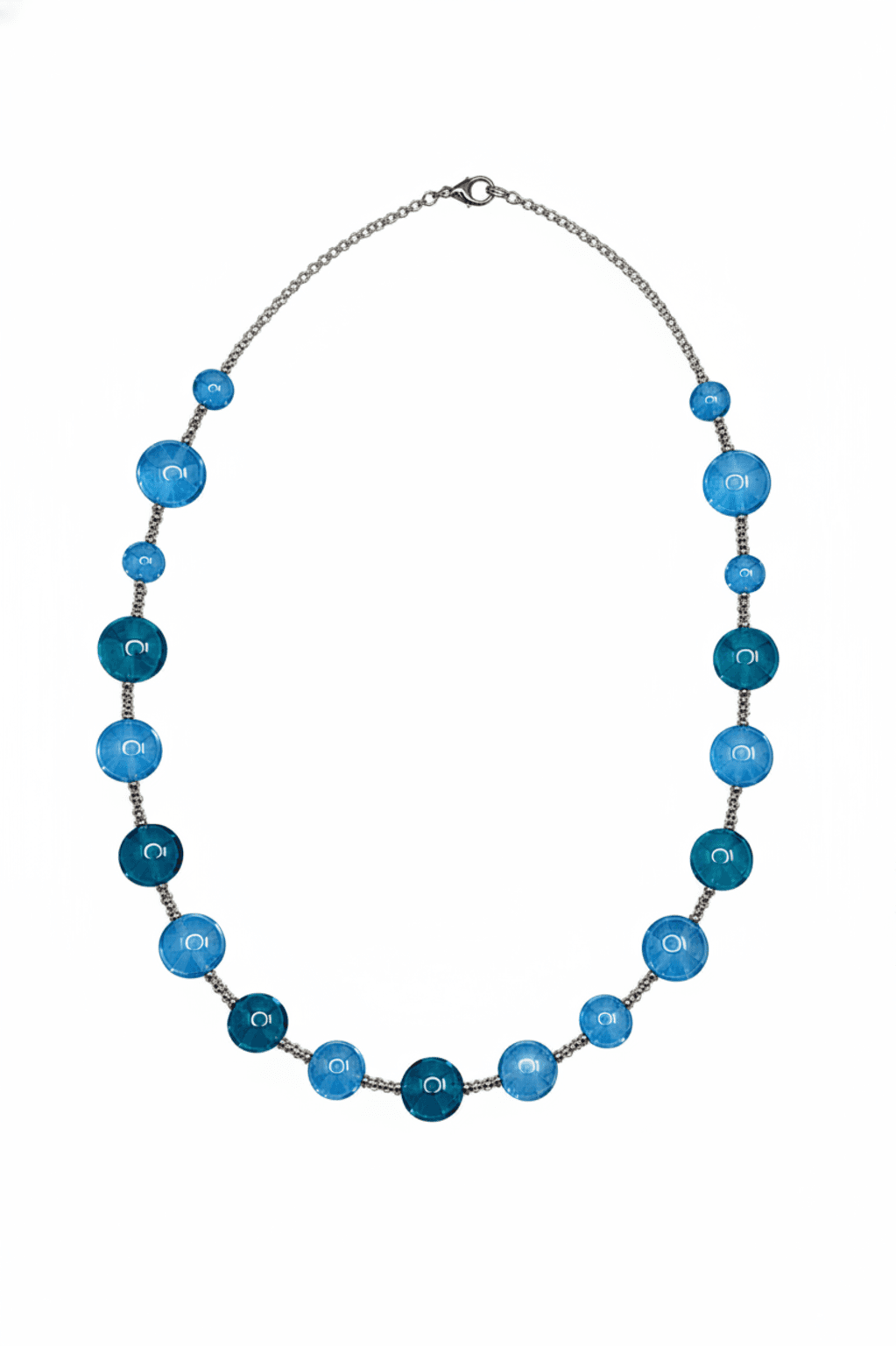
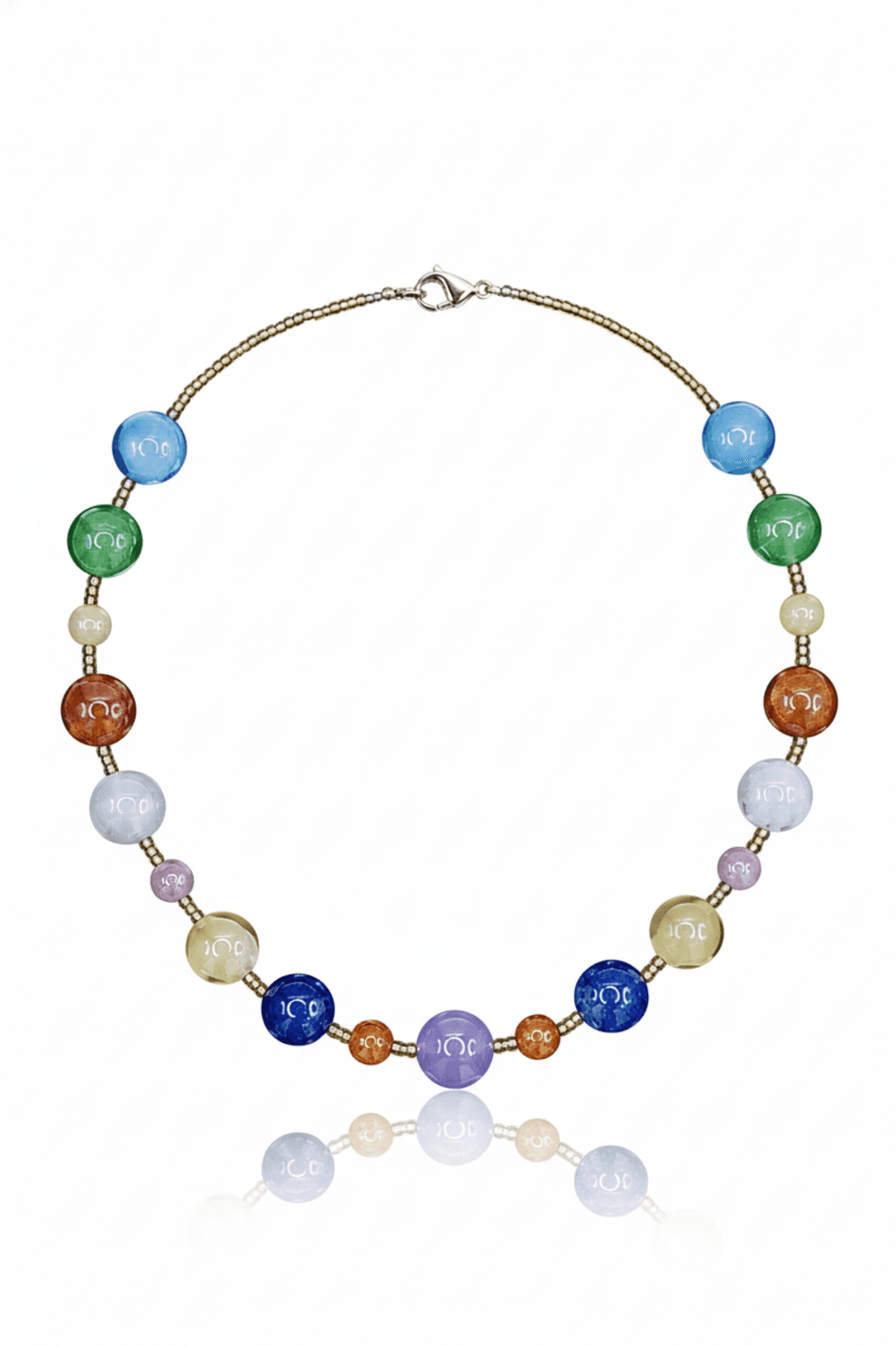
Starry Night Necklace
100,00 €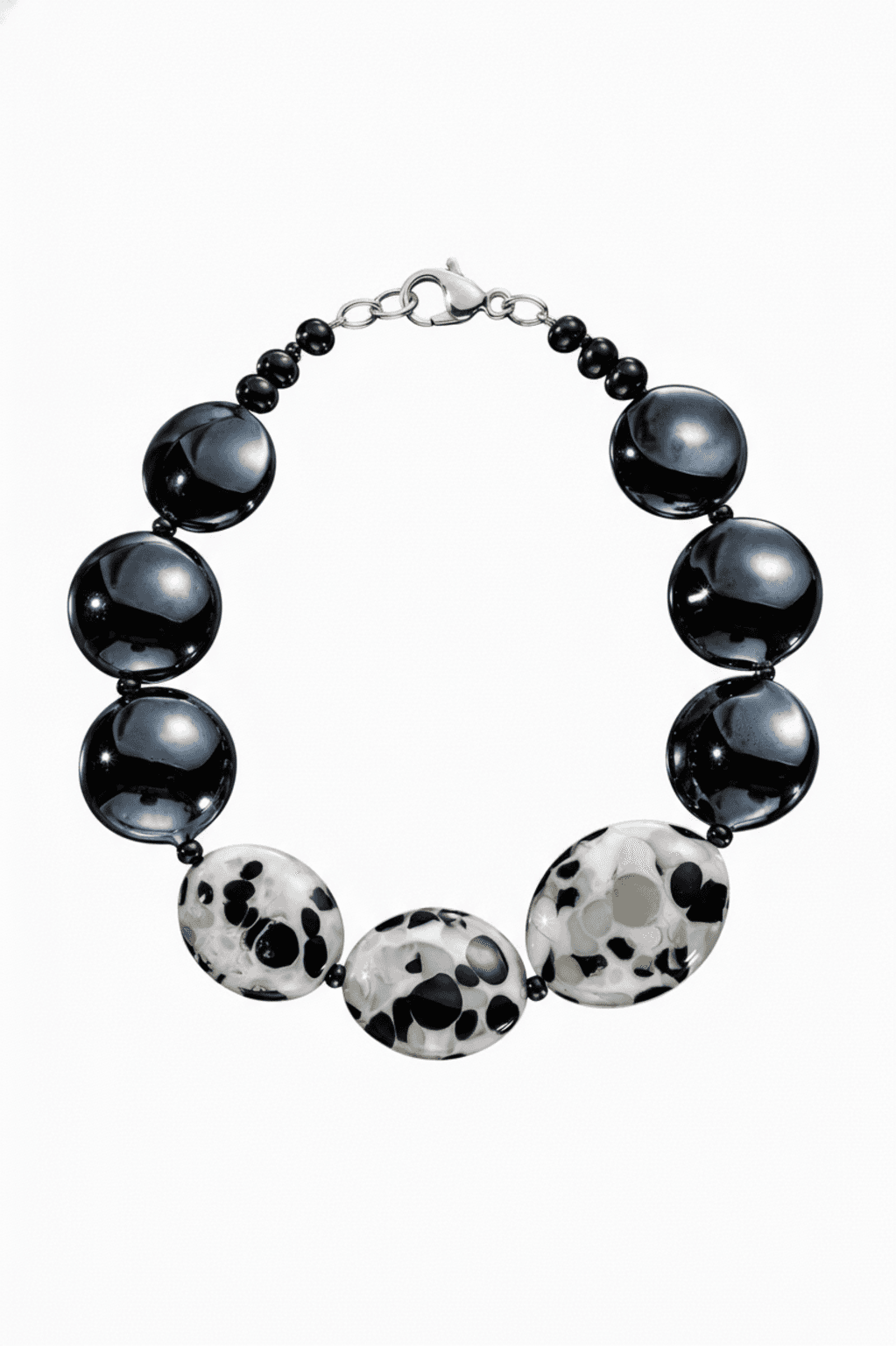
Onyx Blossom Bracelet
80,00 €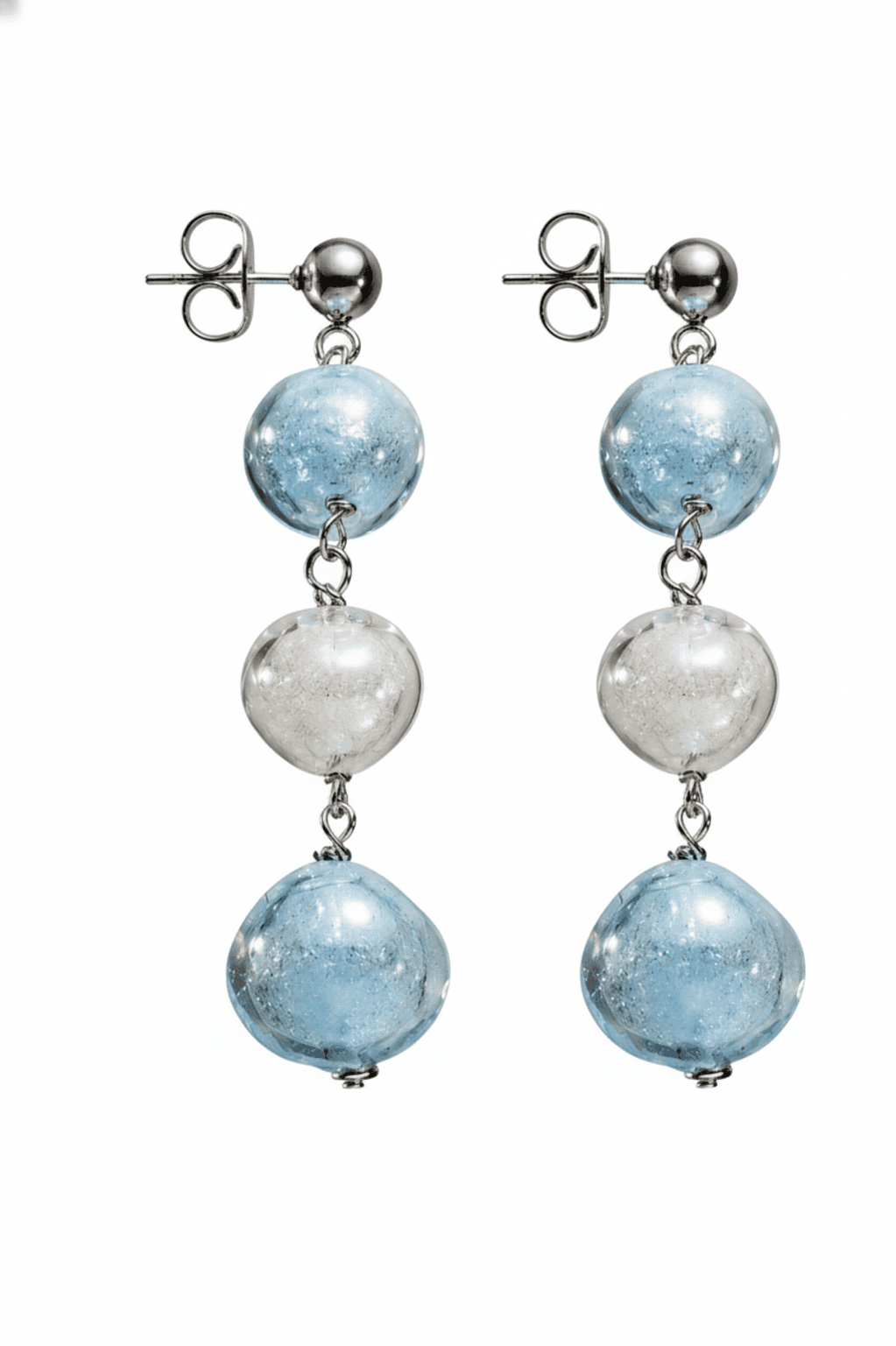
Ice Drop Earrings
80,00 €
Explore contemporary Murano glass jewellery
Sources & further reading
The historical definition and composition of cristallo and lattimo, including the distinction from Bohemian and English crystal.
Comparative analysis of Venetian soda-glass compositions and the use of archaeological and historical evidence to study changing recipes.
The chemical variation in medieval vessels from Murano and the limits of inferring an object’s workshop from composition alone.
L’Arte Vetraria distinta in Libri Sette
A primary 1612 printed witness to early modern glassmaking knowledge; treated as period evidence rather than a timeless Murano formula book.
Glass working techniques and compositions
The museum’s definitions of cristallo, filigree and other glass types by composition and process.
The Nature of Glass: Technologies of Transparency, Materials on the Move
A peer-reviewed material-history framework for connecting glass properties, practical knowledge and supply networks.