Venetian Glass Beads: Conterie, Chevrons and Lampwork
Long before glass beads were jewellery for the few, they were one of Venice's great exports. The Murano Glass Museum dates the first Venetian beads to the fourteenth century, and for centuries they travelled in trade to Africa, the Americas and India.
The museum groups Venetian beads by how they are made. All three begin with glass rods — thin or thick, of one colour or built from concentric layers, solid or pierced through the middle — but they become very different objects.
Conterie: seed beads by the thousand
Conterie are the smallest and simplest: single-coloured beads made in quantity from thin, hollow glass canes. The museum's glossary describes them as beads made by cutting a hollow cane and giving the resulting cylinders a round shape. They were used for embroidery and all kinds of compositions, and they are documented on Murano from the fourteenth century.
Rosetta: the chevron bead
Chevron beads start from much larger pierced canes, made of several coloured layers, each with a star-shaped cross-section. The cane is cut into short cylinders, which are then rounded on a grinding wheel so that the star pattern shows through. The results are large and oval, most often in white, red and blue. According to tradition, the technique was invented in the fifteenth century by Marietta Barovier, daughter of Angelo Barovier, the glassmaker credited with inventing cristallo.
The rods are cut into small cylinders and then rounded using a grinding wheel to “reveal” the star pattern.
A lume: beads shaped in a flame
Lampwork beads are the most individual of the three, and they can be traced back to the seventeenth century. Here the starting point is a solid rod. The glassworker heats it in a flame — the lume that gives the technique its name — and lets the softened glass wind onto a metal wire held in one hand and turned continuously. Colours, layers and surface effects are added bead by bead, so no two come out quite the same.
How beads kept Murano working
When blown glass fell into crisis after the end of the Republic of Venice in 1797, bead-making held on. The museum notes that it kept its factories and sales networks, and that women were a significant presence both among the workers and as designers of the most successful beads.
In 1898 a number of bead-making companies joined together as a single large firm, the Società Veneziana Conterie, in buildings in the heart of Murano near the Basilica of San Donato. Between 1940 and 1970 it employed more than 3,000 people; it closed in 1993. Its restored spaces are now part of the Glass Museum.
Beads you can wear
Today, glass beads are one of the most personal ways to carry a piece of Murano's history. When you choose one, look closely: the small irregularities of a hand-shaped bead are part of its character. For help telling genuine Murano glass from imitation, read how to recognize authentic Murano glass.
Pieces from the collection
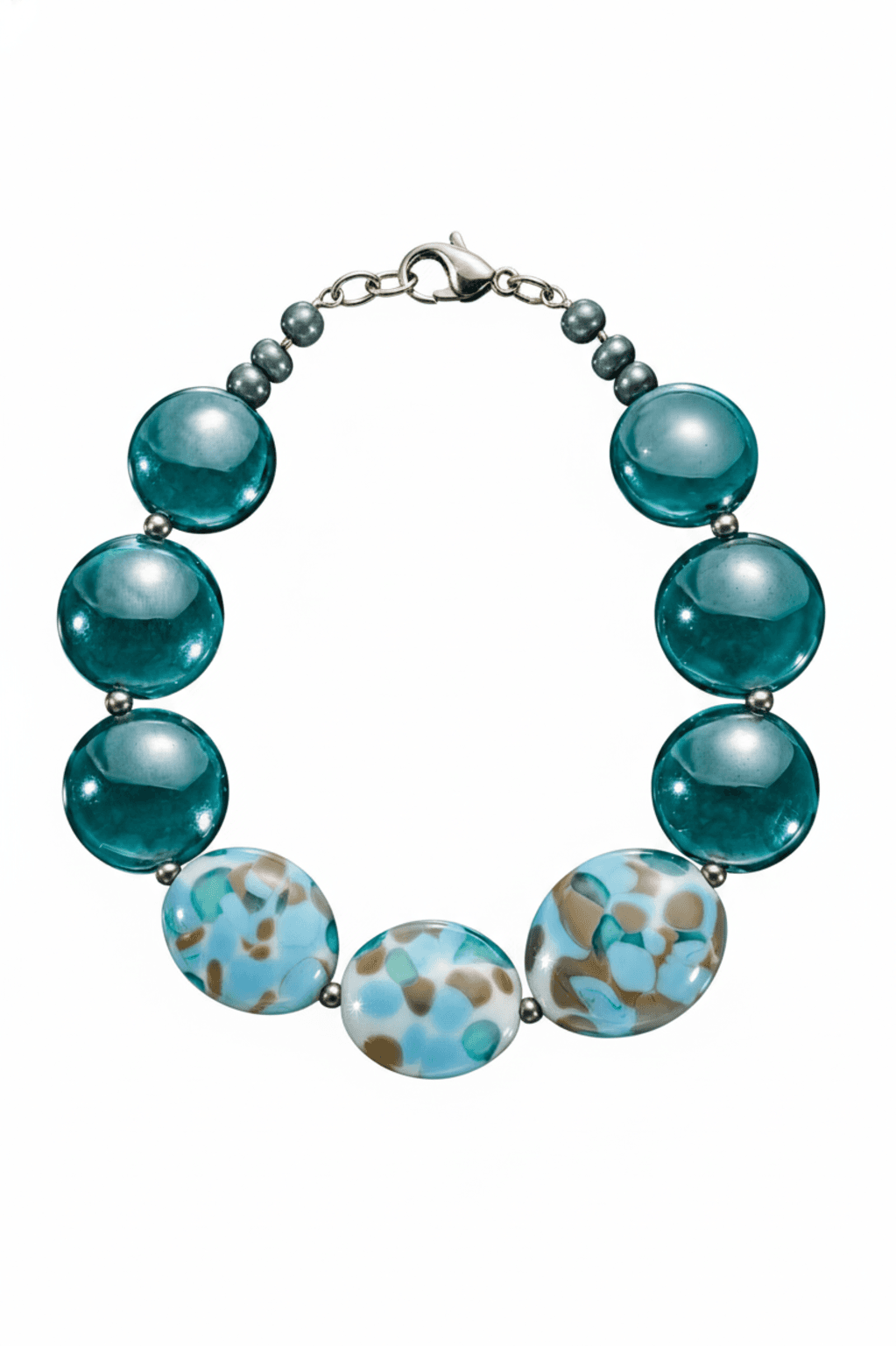
Azure Lagoon Bracelet
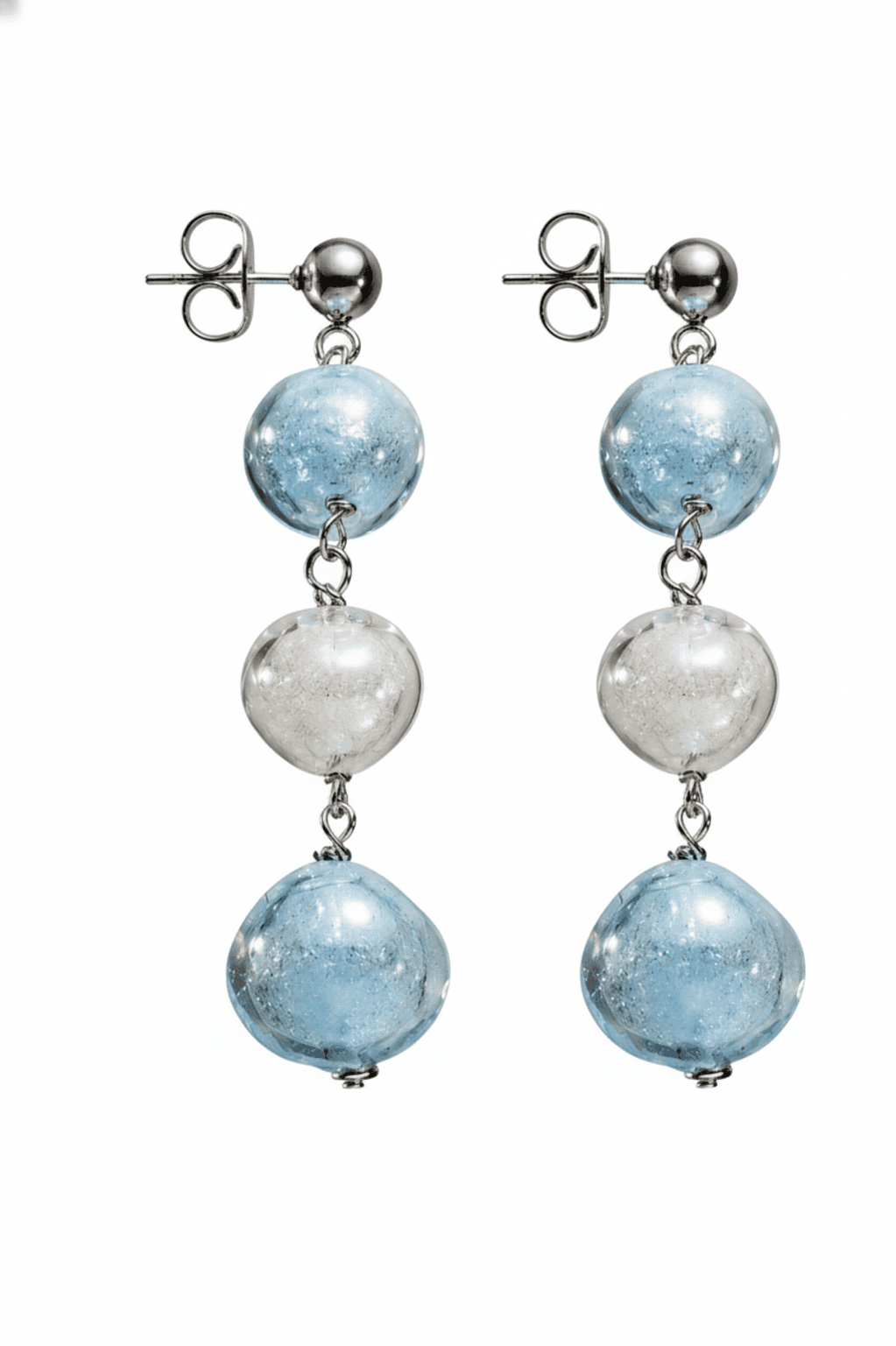
80,00 €Ice Drop Earrings
80,00 €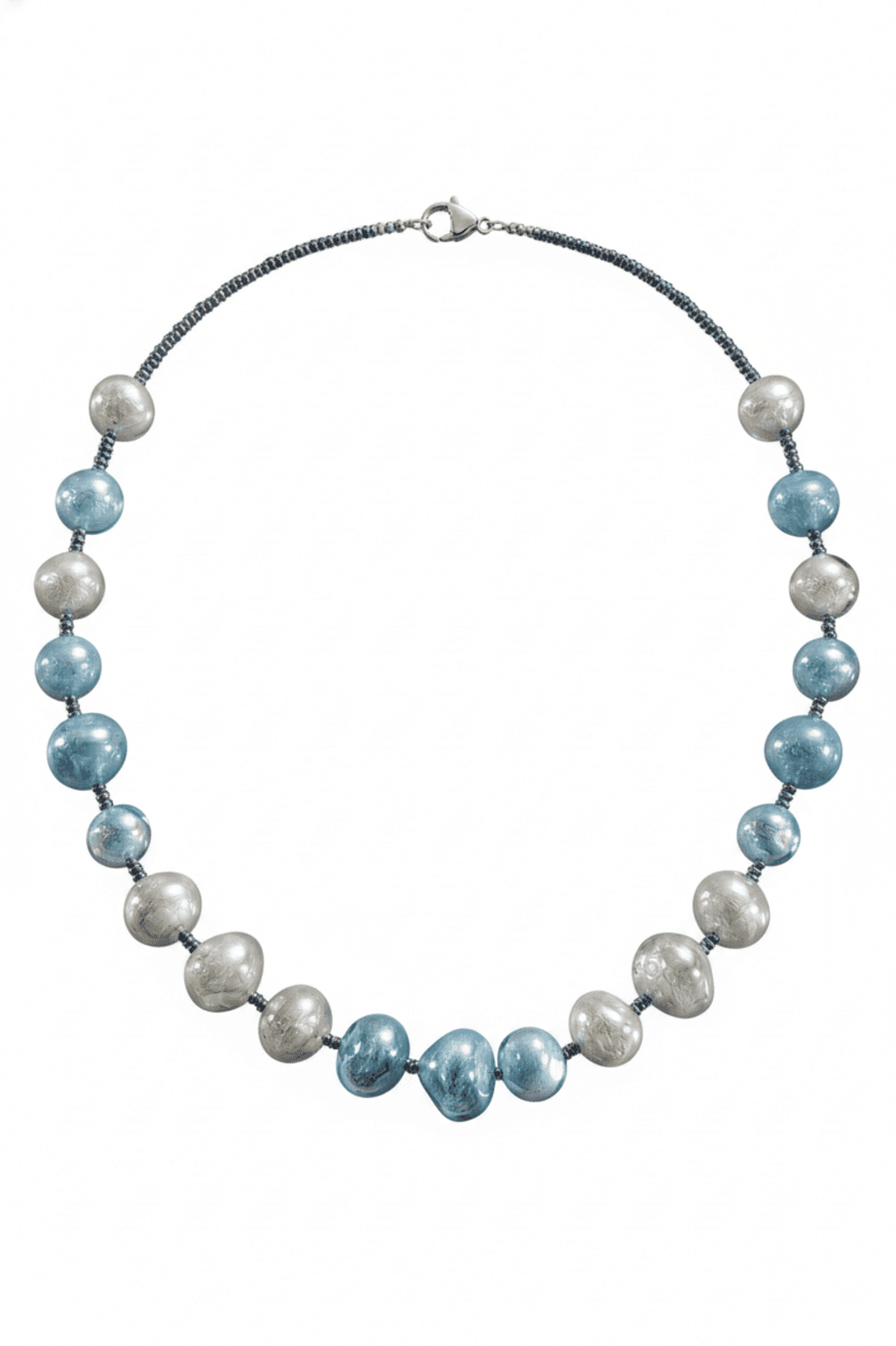
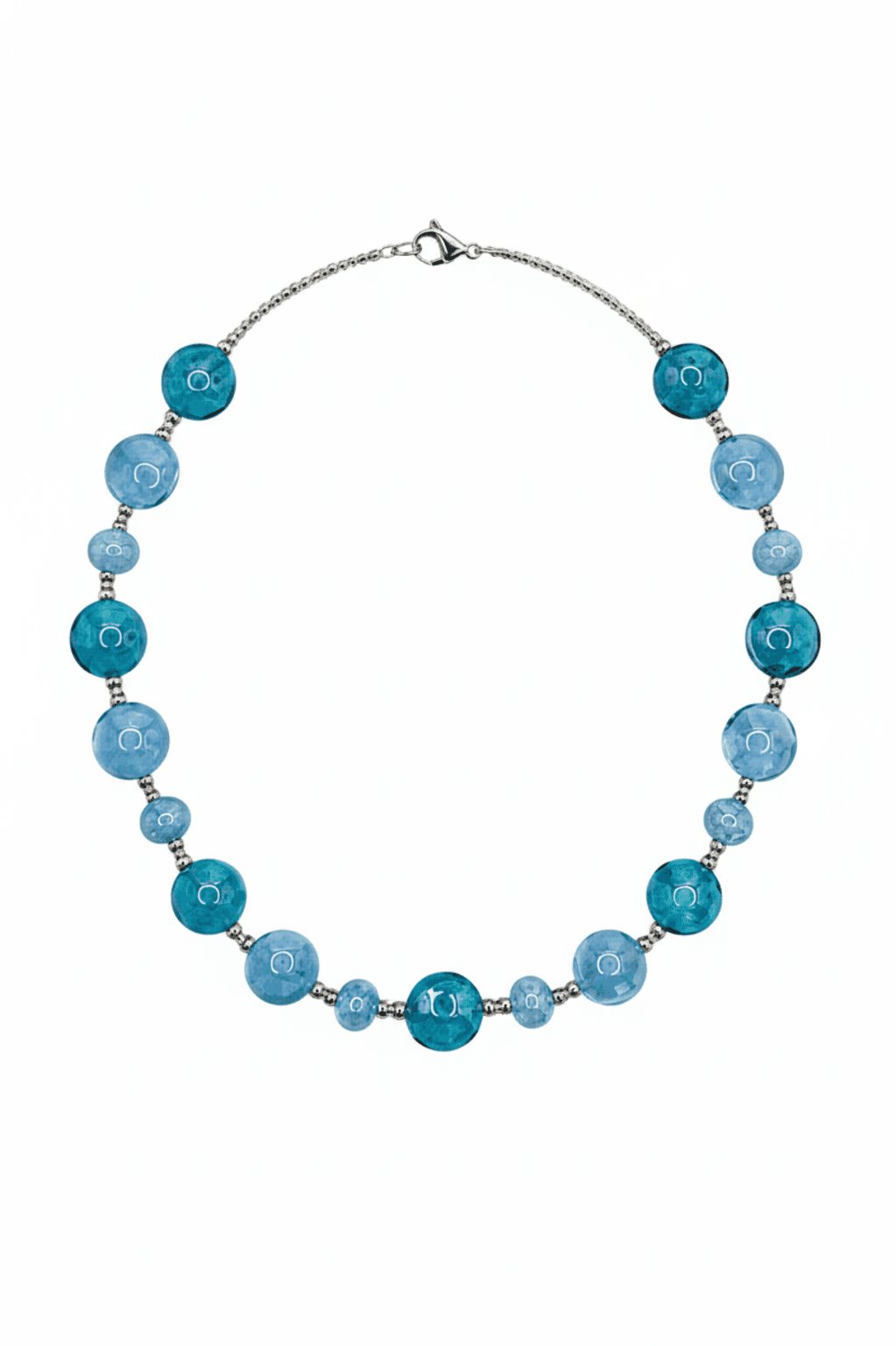
Celestial Pearl Necklace
100,00 €
Discover our Murano glass bracelets
Sources & further reading
- Venetian beads — Fondazione Musei Civici di Venezia — Museo del Vetro, Murano
- Glass Museum of Murano: room-by-room gallery guide (English) — Fondazione Musei Civici di Venezia — Museo del Vetro, Murano
- Glossary — Fondazione Musei Civici di Venezia — Museo del Vetro, Murano
- Conterie space — Fondazione Musei Civici di Venezia — Museo del Vetro, Murano