The History of Murano Glass, from the 1291 Decree to Today
A small island in the Venetian lagoon has been synonymous with glass for more than seven centuries. Its story is one of fire, invention, near-collapse and revival — and it is told best by the objects themselves, many of which are kept today in the Glass Museum on Murano.
Why glassmaking moved to Murano
Around the year one thousand, Venice was becoming a hub of trade with the eastern Mediterranean, and in particular with Syria, one of the oldest centres of glass production. According to the Museo del Vetro, the first Venetian glassmakers imitated Syrian glass and imported some of their raw materials from that region. Early Venetian glass was mostly made up of simple, everyday objects.
The trade grew quickly — so quickly that in 1291 the government of Venice decided to move all glass production to the island of Murano, to limit the risk of fire from the furnaces in a city built so densely. That decision made Murano what it still is: an island whose identity is bound up with glass.
Cristallo and the Golden Age
The museum describes the period from the fourteenth to the seventeenth century as Murano's golden age, but it was only from the middle of the fifteenth century that Venice took an unchallenged lead. The turning point was cristallo: a glass that, for the first time, could be completely transparent and pure, close in appearance to rock crystal. Its invention is credited to Angelo Barovier, born on Murano in 1405.
For the first time in history, glass could be completely transparent and very pure, similar to rock crystal.
Decorated with enamel and gold, the new transparent glass was sought after by great families, doges and even the pope. In the sixteenth century Murano's work became openly virtuosic, much of it shaped free-hand — a way of working that, as the museum notes, still distinguishes the island's master glassmakers today. New kinds of glass appeared, among them ice glass, with its rough, translucent surface, and filigree, invented around 1527, in which rods containing fine threads of white or coloured glass are worked into twisted (a retortoli) or net-like (a reticello) patterns.
Imitation, decline and the fall of the Republic
In the seventeenth century taste moved towards more elaborate shapes, and many of Murano's glassmakers left the island. The eighteenth century brought glass that imitated other precious materials: lattimo, a white glass resembling porcelain, and chalcedony glass, which imitates the quartz of the same name.
Then came a long crisis. Competition from Bohemian glass grew, and in 1797 the Republic of Venice ceased to exist. The guilds and the protections that had safeguarded local production were abolished; under Austrian rule from 1815, Bohemian products spread through the markets, while duties on Murano's imported raw materials and finished goods rose. Skilled craftsmen left and recipes seemed lost. By 1820, the museum records, sixteen furnaces remained on the island, and only five of them still produced blown glass.
One branch of the craft held firm: beads. While blown glass declined, Venetian bead-making kept its factories and sales networks — with, the museum notes, a significant presence of women both among the workers and as designers.
The nineteenth-century revival
In the second half of the nineteenth century, glassmakers and entrepreneurs set about recovering what had been lost. Lorenzo Radi researched chalcedony glass, Vincenzo Moretti mosaic glass, and filigree was rediscovered. The glassmaker Bigaglia revived avventurina, a glossy glass with tiny copper crystals whose seventeenth-century recipe had been lost. From the 1860s, new firms such as Fratelli Toso and Salviati & C. showed ever more ambitious work at the world exhibitions, finding buyers abroad, especially in Britain.
The revival also produced the museum itself. The Glass Museum was founded in 1861 on the initiative of Antonio Colleoni, then mayor of Murano, with the aim of gathering the history of an island in crisis since 1797. In 1862 Vincenzo Zanetti added a school where glassworkers could study design and the historic models in the collection. The museum occupies Palazzo Giustinian, once the residence of the bishops of Torcello, and became part of Venice's civic museums after Murano was joined to the city of Venice in 1923.
From the furnace to jewellery today
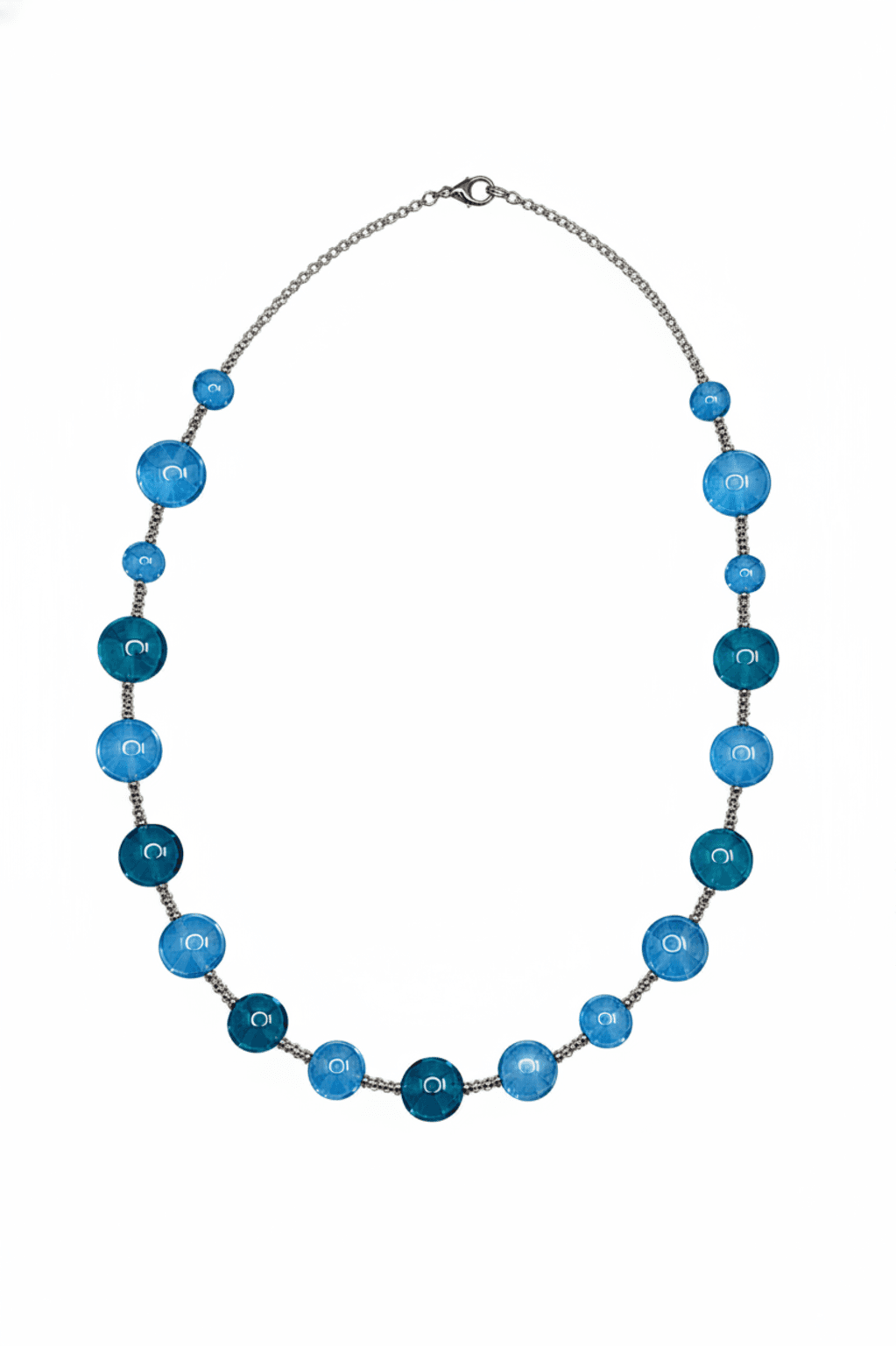
The museum's collection continues into the twentieth century, with a section devoted to glass and design from 1900 to 1970. Beads, meanwhile, remained one of the most personal ways Murano glass travels: small enough to wear every day, and each one shaped by hand. If you would like to see how the techniques named in this story appear in finished pieces, our guide to Murano glass is a good next step.
Pieces from the collection
Faceted Turquoise Necklace
120,00 €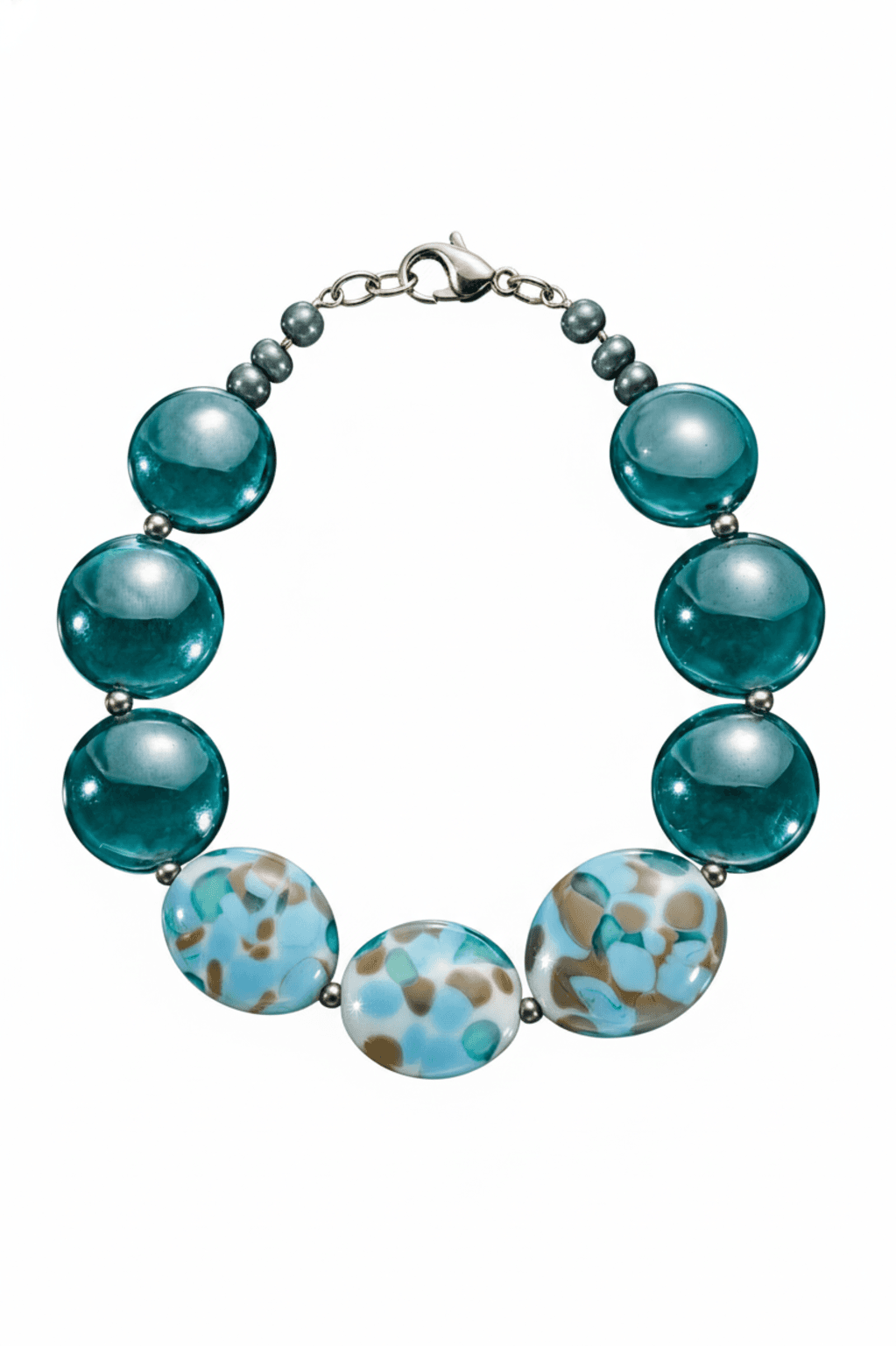
Azure Lagoon Bracelet
80,00 €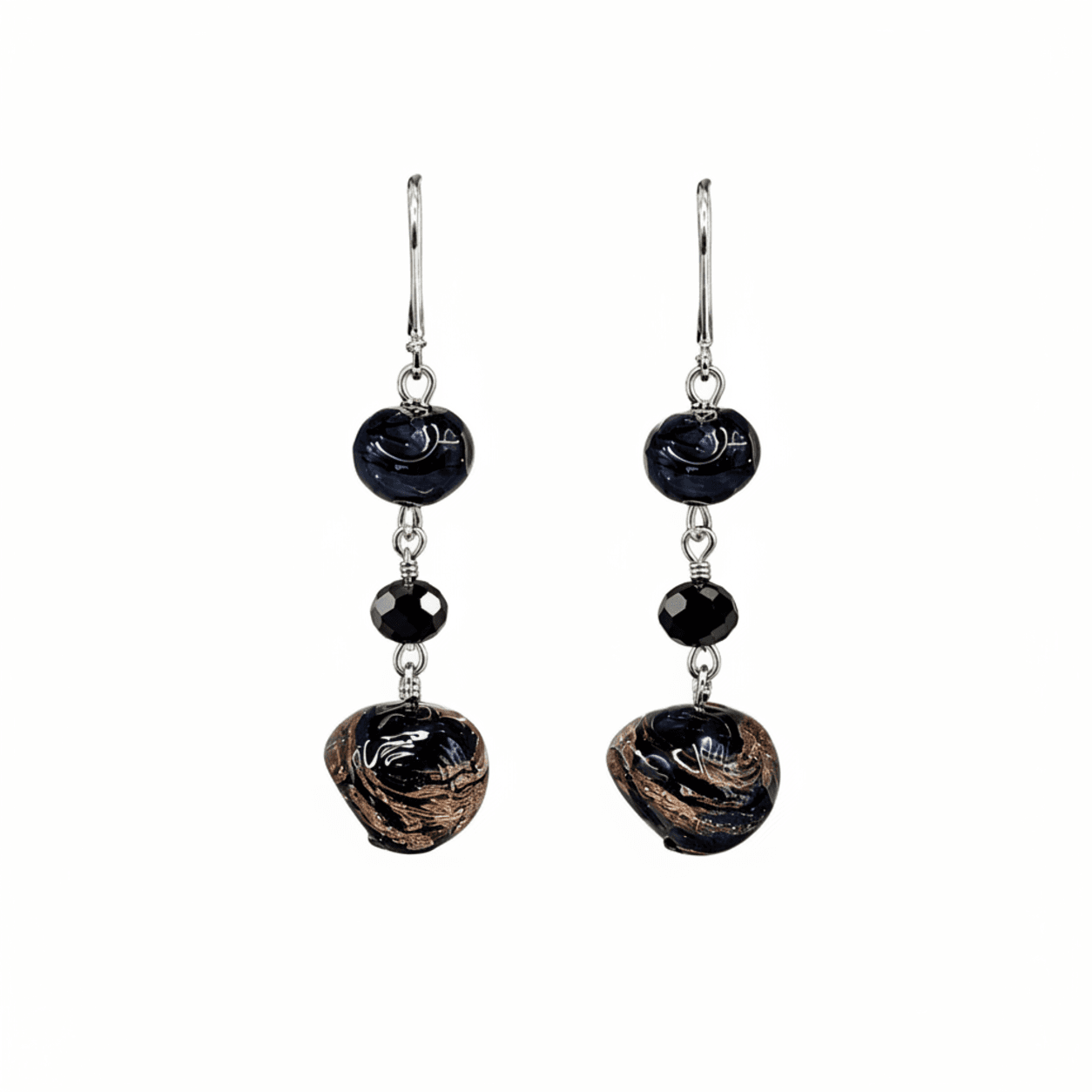
Deep Blue Earrings
80,00 €
Explore handmade Murano glass jewellery
Sources & further reading
- Glass Museum of Murano: room-by-room gallery guide (English) — Fondazione Musei Civici di Venezia — Museo del Vetro, Murano
- Le musée et les collections — Fondazione Musei Civici di Venezia — Museo del Vetro, Murano
- Glass Museum — Fondazione Musei Civici di Venezia — Museo del Vetro, Murano
- Building and history — Fondazione Musei Civici di Venezia — Museo del Vetro, Murano